
Danielle, who was diagnosed with retinitis pigmentosa in her mid-twenties, shares her story of navigating life with an inherited retinal disorder that causes progressive vision loss.
Danielle first realized something wasn’t quite right when she began struggling to see in dimly lit places while out with her friends. She had no sense she could have a genetic disease.
After first seeing a local optometrist, Danielle was referred to a retinal specialist and was diagnosed with retinitis pigmentosa (RP), a rare inherited retinal disease that gradually causes permanent vision loss. Many years after Danielle’s diagnosis, her brother was also diagnosed with RP, reinforcing the nature of genetic conditions like this.
Like many people diagnosed with RP, Danielle learned that there was no cure and treatment options were limited. Although an FDA-approved gene therapy is available to treat inherited retinal diseases caused by specific RPE65 gene mutations, those mutations are rare, affecting only about 2% of people with RP. For individuals like Danielle who don’t have these mutations, there are no viable treatment options beyond supportive measures like low vision aids. Instead, living with RP would mean Danielle needed to adapt as her vision worsened, and she has increasingly relied on her “seeing eye people,” friends and family becoming her essential support system.
What is Retinitis Pigmentosa?
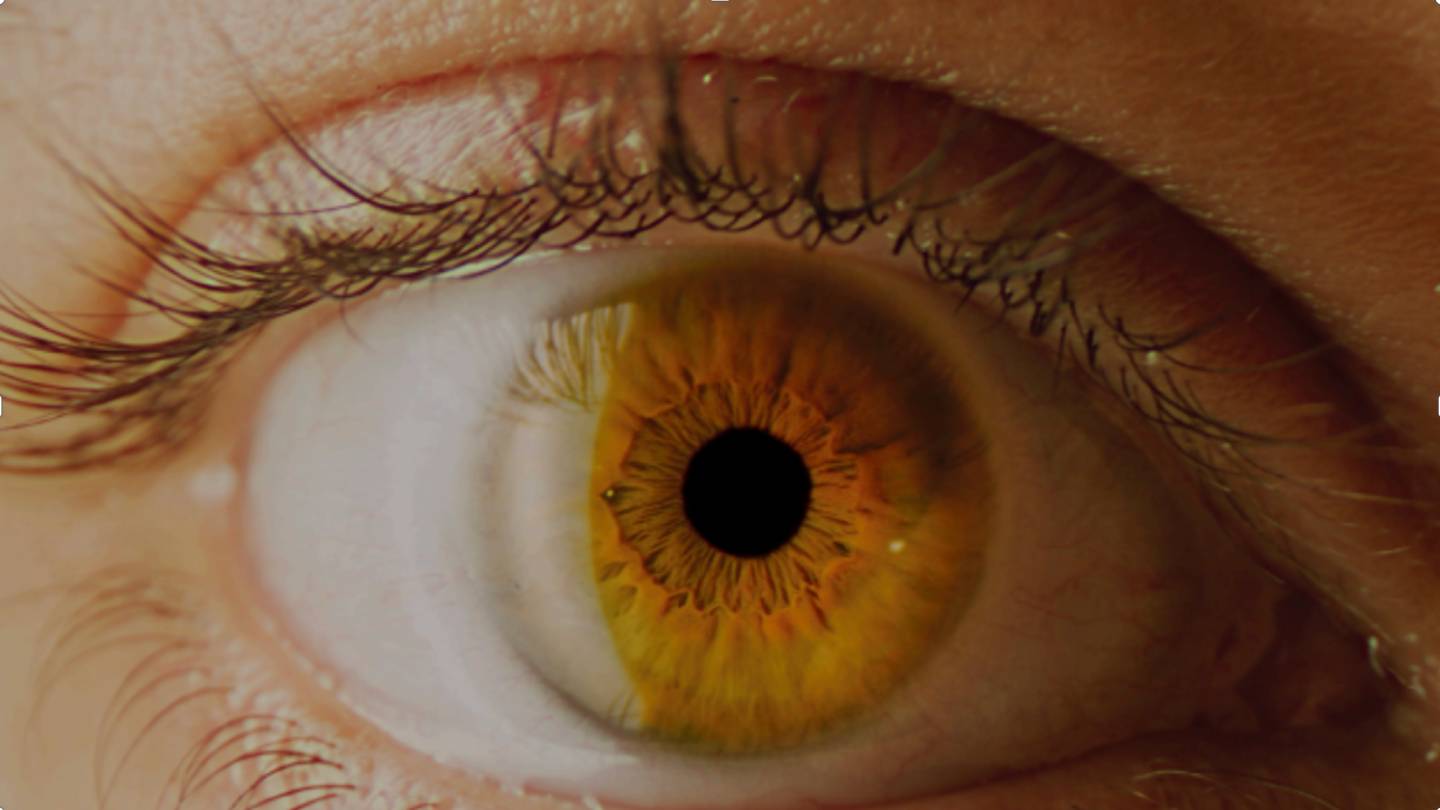
Retinitis pigmentosa (RP) is one of a group of rare genetic eye conditions known as inherited retinal disorders (IRDs). In RP, loss of vision results from damage to cells (referred to as photoreceptor cells) in the retina, the light-sensitive tissue at the back of the eye. Because these conditions are inherited, they can affect multiple members of the same family.
Early retinitis pigmentosa symptoms include difficulty seeing in dim light or at night. As the disease progresses, many people can begin to lose their peripheral (side) vision, which may gradually narrow, leading to what’s commonly known as tunnel vision. While vision changes will vary from person to person, many people with RP eventually experience significant vision loss and may become legally blind.
RP is just one type of IRD. Other IRDs include Stargardt disease, Usher syndrome, cone-rod dystrophy and Leber congenital amaurosis. Although each condition affects vision differently, many are degenerative, which means that the symptoms of the disease can get progressively worse over time due to increasing damage of light-sensitive cells in the retina.
Learning to Adapt as Vision Changes
Like many individuals with retinitis pigmentosa, Danielle has experienced gradual vision loss. On every stage of her journey with RP, she has learned to adapt. As her peripheral vision has narrowed considerably, she has increasingly relied on her network to help her navigate unfamiliar environments and busy public spaces. Her night vision also has worsened, and she has not driven for a number of years. The availability of ride-hailing services and living in a walkable city has been enormously helpful for Danielle in retaining her independence.
More than two decades after her initial diagnosis, Danielle continues to build a fulfilling career, raise her family, and advocate for greater awareness of IRDs like RP.
“I’ve always tried to adapt,” she said. “For each person, you figure out what works for you. To be realistic, the world is not so likely to change for me, so I need to adapt to it. And I have been lucky to be able to do that and have a strong support network. That’s critical, at least for me.”
Vision Loss Isn’t Always Visible
Since people with RP often retain meaningful vision that supports many everyday activities, it may not be immediately obvious to others the challenges they face. For Danielle, working on a laptop and taking virtual meetings is no issue; however, stairs or changes in elevation can be very hard to see, for example, and she must rely on others to guide her. Many people, including her colleagues, often do not realize she has vision loss until they see her in person with her white cane.
She also has used a white cane for the past few years. While this has represented a further milestone in the worsening of her RP, it also has been a valuable tool in getting around safely, as well as raising awareness. “The cane helps people understand that I need a little more space or assistance,” Danielle explained. “I have seen firsthand that people can be incredibly kind once they understand that I might have some limitations of vision.”
Perspective Makes the Difference
Living with RP has taught Danielle many lessons, but one stands out above the rest: perspective. For Danielle, perspective means acknowledging the difficult moments without allowing them to define her. Instead, she chooses to focus on what she can do today and the people who have helped her along the way. “You figure out what works, and you keep moving forward,” she said.
Just as others may not realize she is living with vision loss, Danielle has come to appreciate more and more that all of us, at times, may be confronting challenges that aren’t immediately visible. This mindset has profoundly influenced not only her personal life but also the way she serves as a leader professionally. Approaching others with empathy, she is recognized at work as someone who counsels patience and perspective and is able to manage the occasional conflicts and stressful situations with skill and caring.
Are New Treatments Being Studied in Retinitis Pigmentosa?
Currently, there are no treatments that can reverse vision loss for people with retinitis pigmentosa. However, clinical researchers are testing in patients potential approaches that may one day slow disease progression, restore function, and expand treatment options.
For Danielle, every scientific advance represents hope, not only for herself, but for others who may receive the same diagnosis in the future. “This is truly one of the things that keeps me going,” Danielle said. “I would love to see progress and new therapies, something that can really change what’s possible for this disease.”
Researchers are exploring several potential approaches to treating inherited retinal disorders, including cell replacement therapy, a technique in which researchers replace photoreceptor cells lost to disease with healthy cells.
Learn how cell therapy works, why researchers are studying it, and what it could mean for IRDs in the future.
Danielle’s Advice for Someone Newly Diagnosed
Receiving an RP diagnosis can feel overwhelming, and Danielle recommends connecting with organizations and communities that provide education and support. For Danielle, the Foundation Fighting Blindness has become a vital resource, and she remains an active member of its community.
Danielle also reinforces that a diagnosis should not define who you are as a person. “You do everything you can to manage your vision loss, and then you need to take things one day at a time,” she said. “Don’t spend too much effort trying to predict the future. Instead, open yourself to all the possibilities for functioning your best in the here and now. That’s what helps me stay grounded and optimistic, taking things day by day.”
