
Dr. Byron L. Lam, who has worked with people living with inherited retinal disorders (IRDs) for three decades, shares his insights into these conditions and why he is hopeful about the future of new treatments that are in development.
IRDs include a broad range of conditions, including retinitis pigmentosa, Stargardt disease, Usher syndrome, cone-rod dystrophy, and Leber congenital amaurosis.
Individuals diagnosed with IRDs know that the route to a diagnosis can be extended and uncertain. While treatment options remain limited for most IRDs today, advances in diagnosis and research are creating new opportunities to better understand these conditions and explore new approaches for care.
According to Byron L. Lam, M.D., retinal specialist, clinical researcher, and professor of ophthalmology at Bascom Palmer Eye Institute at the University of Miami Miller School of Medicine, the field has changed dramatically over the course of his nearly 30 years caring for people with IRDs.
“One major change has been the introduction of a gene therapy, Luxturna, for patients with a specific gene defect,” said Dr. Lam. “While this treatment is intended only for a subset of patients, it changed how we think about care by reinforcing the importance of genetic testing and demonstrating what may become possible through continued innovation.”
Dr. Lam points to another major shift taking place today: the growing number of clinical studies evaluating new treatment approaches for IRDs.
“We’re living through a period of tremendous scientific progress,” he explained. “The increase in research efforts gives me optimism that we may continue expanding options for patients in the future.”
Understanding IRDs starts with understanding the patient journey
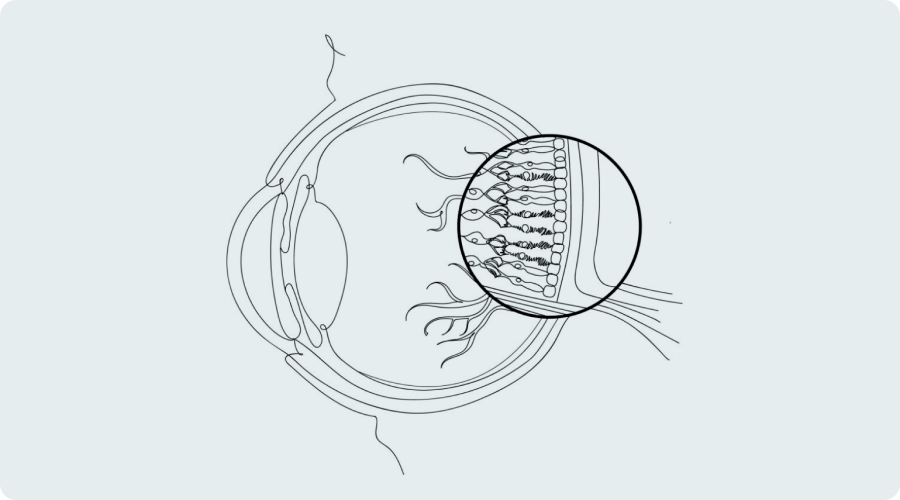
IRD is an umbrella term that represents a broad group of diseases affecting the retina, the light-sensitive tissue at the back of the eye. Some examples of IRDs include:
- Retinitis pigmentosa (RP): Often diagnosed by adolescence or young adulthood, RP causes progressive loss of night and peripheral vision and can lead to legal and sometimes complete blindness
- Stargardt disease: An inherited form of macular degeneration causing central vision loss; this IRD is also often diagnosed in young adulthood.
- Usher syndrome: A subset of RP that is also characterized by hearing loss
- Cone-rod dystrophy (CRD): A rare group of IRDs in which cone cells and then rod cells progressively degenerate; CRD is first usually associated with loss of color vision and central vision, then followed by nyctalopia (night blindness) and loss of peripheral vision
- Leber congenital amaurosis: Constituting a group of IRDs causing blindness or severe vision loss in early childhood
Symptoms and progression can vary significantly from one person to another. For some people living with an IRD, individuals in their teens or 20s may first notice small, incremental changes and bring them up with an optometrist or primary care physician. Others may experience symptoms much earlier in life.
Because no two experiences are exactly alike, reaching the most complete diagnosis possible is an important step in helping patients understand their condition and plan for the future.
How IRDs are diagnosed
Doctors may use several tools to better understand retinal health and function, including:
- Visual field tests to assess blind spots and sensitivity loss
- Retinal imaging, such as optical coherence tomography (OCT) and fundus photography to assess retinal structure and monitor changes over time
- Electroretinograms (ERGs), which are used to evaluate how the retina responds to light
- Genetic testing to help identify potential disease-causing variants and support understanding of prognosis, care decisions, and potential research opportunities. While these tests are not definitive in all cases, research continues to expand our knowledge about the genetic defects that can lead to the development of IRDs.
The goal of putting a patient through numerous tests is to determine both their specific condition and stage of the condition. In this light, the clinician can then discuss with the patient the potential prognosis, which itself can be very variable, and initiate a complete care plan.
According to Dr. Lam, “We need to ensure the care community is as up to date and aware of the full set of diagnostic protocols as possible. Knowing as much as we can about the underlying disease allows us to best address the patient’s current situation and help them meet the challenges they are facing and will continue to face.”
Each IRD care program should be tailored to the individual and designed to support daily activities at school or work, provide low-vision aids and services when needed, and, very importantly, address the emotional and even financial aspects of the person’s disease.
Byron L. Lam, M.D., professor of ophthalmology at Bascom Palmer Eye Institute at the University of Miami Miller School of Medicine
The future of treatment is being tested now
Today, researchers are studying multiple approaches to better understand whether new therapies may help people living with different forms and stages of IRDs.
Areas of active research include:
- Gene therapies
- RNA-based approaches
- Neuroprotective medicines
- Optogenetics, which explores introducing light-sensitive molecules into retinal cells
- Cell therapies
Gene therapies have demonstrated promise for some inherited retinal disorders but generally rely on having sufficient remaining retinal tissue to support treatment.
Cell therapies are designed to explore whether replacing certain retinal cells or supporting retinal health in other ways may offer restored function.
Because different IRDs affect different layers of the retina and progress differently over time, research efforts are often highly specialized and require years of development before entering human studies.
For individuals interested in participating in clinical research, Dr. Lam encourages conversations with care teams to understand whether studies may be appropriate.
“For patients who wish to be in FDA-regulated clinical trials, clinicians should do all they can to ensure they have the opportunity,” explained Dr. Lam. “Generally, FDA-sanctioned trials in humans have already shown sufficient success in animal studies, and as therapies progress through stages of development, increasing information on safety and efficacy are accumulated. However, studies do require time and commitment from patients and caregivers. Studies also may have enrollment criteria that only allow for certain individuals to be enrolled. All patients should take the time to fully assess risks and benefits before trying to enroll in a study.”
Considering a clinical trial
While many questions remain, Dr. Lam believes the current pace of progress represents an important moment for the IRD community, and believes cell therapy may be one of few therapies in development that has the potential to treat more advanced IRDs, since cell therapy relies less on preserved architecture of the retinal layers.
“We still have work ahead of us,” he said. “But today we have more tools to diagnose disease, more opportunities to support patients, and more research underway than ever before, and that gives us reason to continue moving forward.”
If you’re interested in learning more about clinical trials and other diverse approaches to treat IRDs, please talk to your doctor or visit clinicaltrials.gov.
